Field Report
TalentX Revealed a Growing Gap Between AI Hype and Operational Reality
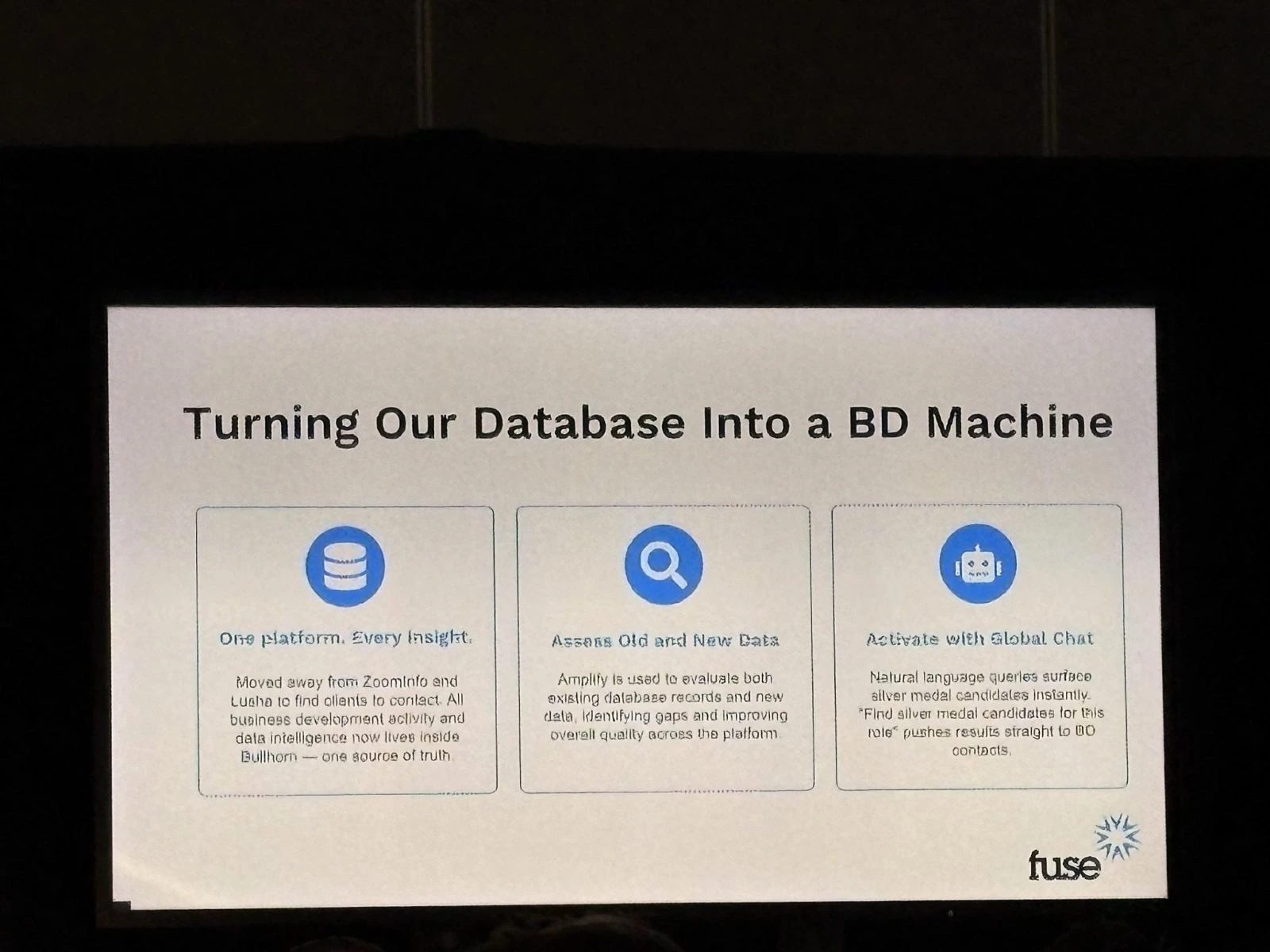
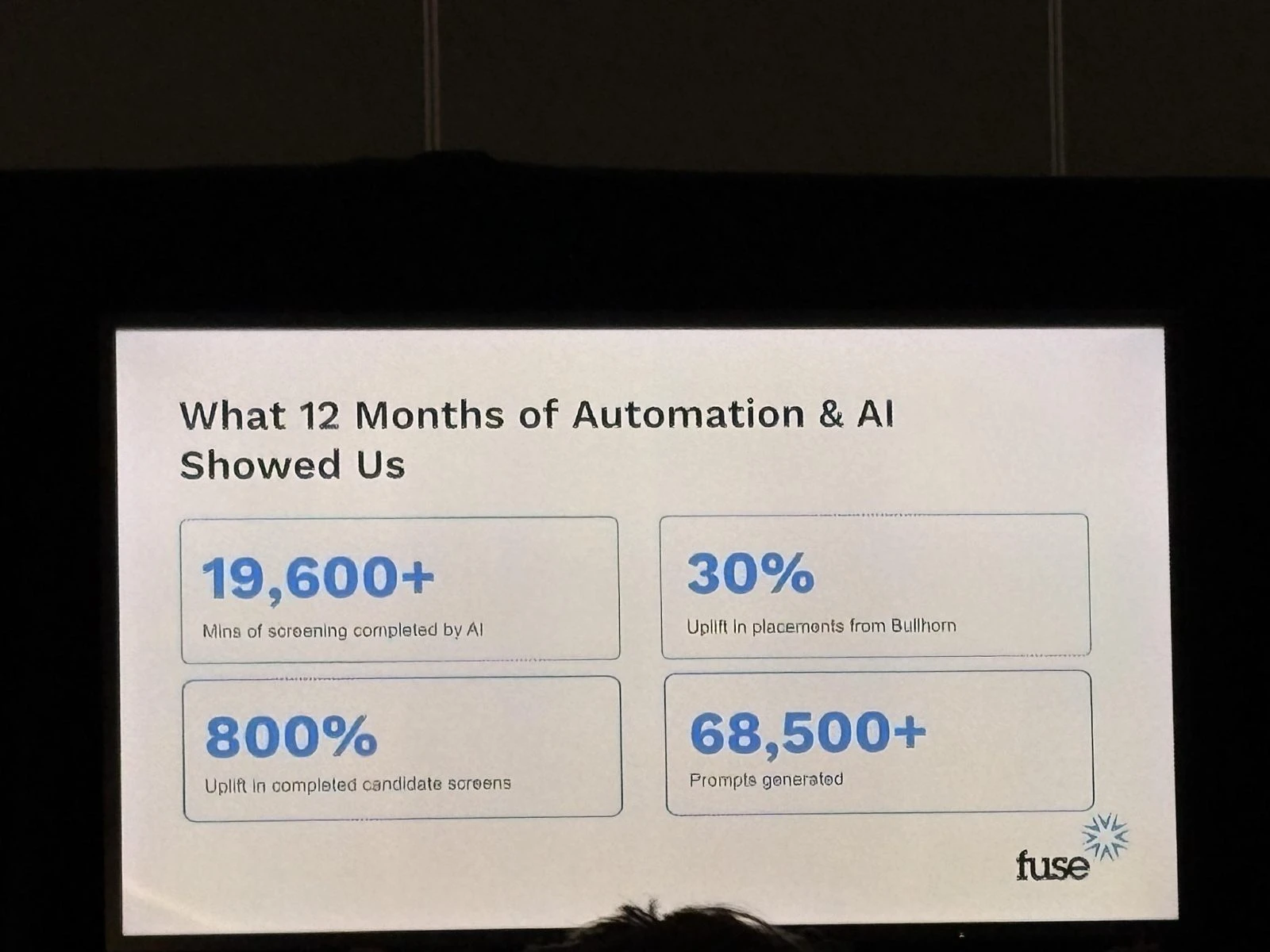
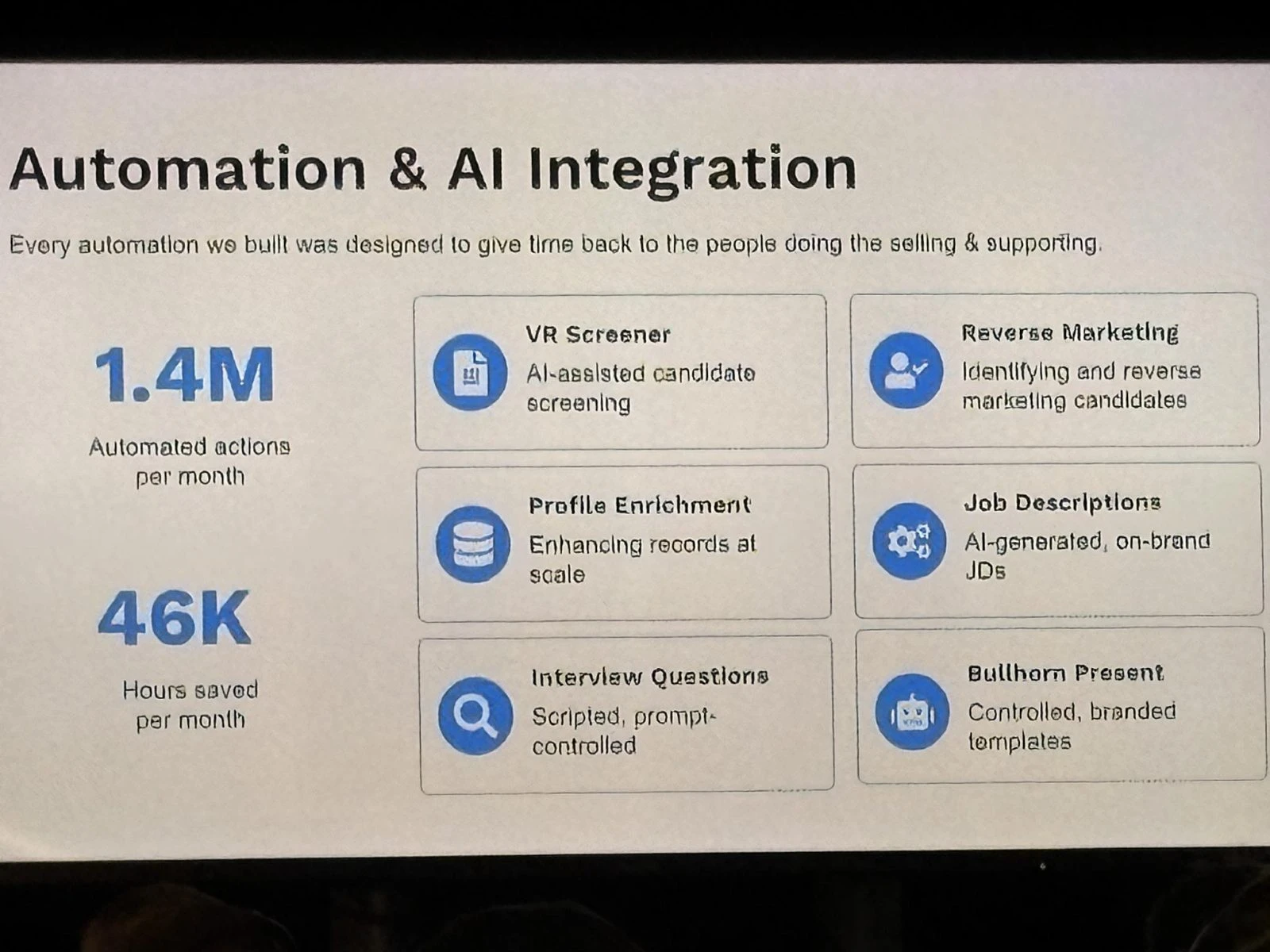
After TalentX Melbourne, one thing became clear: recruitment agencies are moving beyond AI excitement and into operational reality. The tools are improving, but many firms are still working through how to translate adoption into meaningful outcomes.
 Jonathan Winter
Founder, RipperWorksMay 20267 min read
Already a week since TalentX and been reading through some of my notes thinking back to some of the great talks across the three stages.
AI and the operational challenges the recruitment industry was a core theme. AI adoption across the industry is clearly accelerating rapidly, and there’s now an enormous amount of experimentation happening across sourcing, screening, outreach, workflow automation and workforce analytics.
But underneath the excitement there were interesting insights and conversation not around whether AI matters but what actually changes some of these tools can have in embedded into real recruitment environments.
While the technology is advancing quickly, operational outcomes across the industry still vary significantly. My co-founder, Steve and I heard some firms seeing meaningful efficiency gains and workflow improvements. Others are finding that layering AI into fragmented systems, inconsistent processes or outdated engagement models doesn’t automatically produce better hiring outcomes.
And that distinction feels increasingly important.
Adoption
AI Adoption Is Accelerating But Differentiation Is Becoming Harder
One of the strongest themes across TalentX was simply the scale of AI adoption now happening across recruitment. From:
The tooling ecosystem around recruitment has been evolving quickly, and most agencies are now experimenting with some level of AI integration across their workflows.
The agencies that seem to be creating the most momentum are not necessarily the ones adopting the most technology but ones integrating it most effectively into how their teams actually operate.
Maturity
The Industry Is Moving Beyond Experimentation
Another noticeable shift at TalentX was the tone of the AI discussion itself.
Twelve months ago, much of the conversation across recruitment was centred around experimentation:
- —what tools existed,
- —what they could potentially do,
- —and how quickly agencies should move.
This year felt different. Agencies are now asking:
- 01Which tools genuinely improve recruiter productivity?
- 02Which workflows are becoming more efficient?
- 03Where does automation reduce friction?
- 04Where does it create additional complexity?
- 05How do we maintain quality while increasing speed?
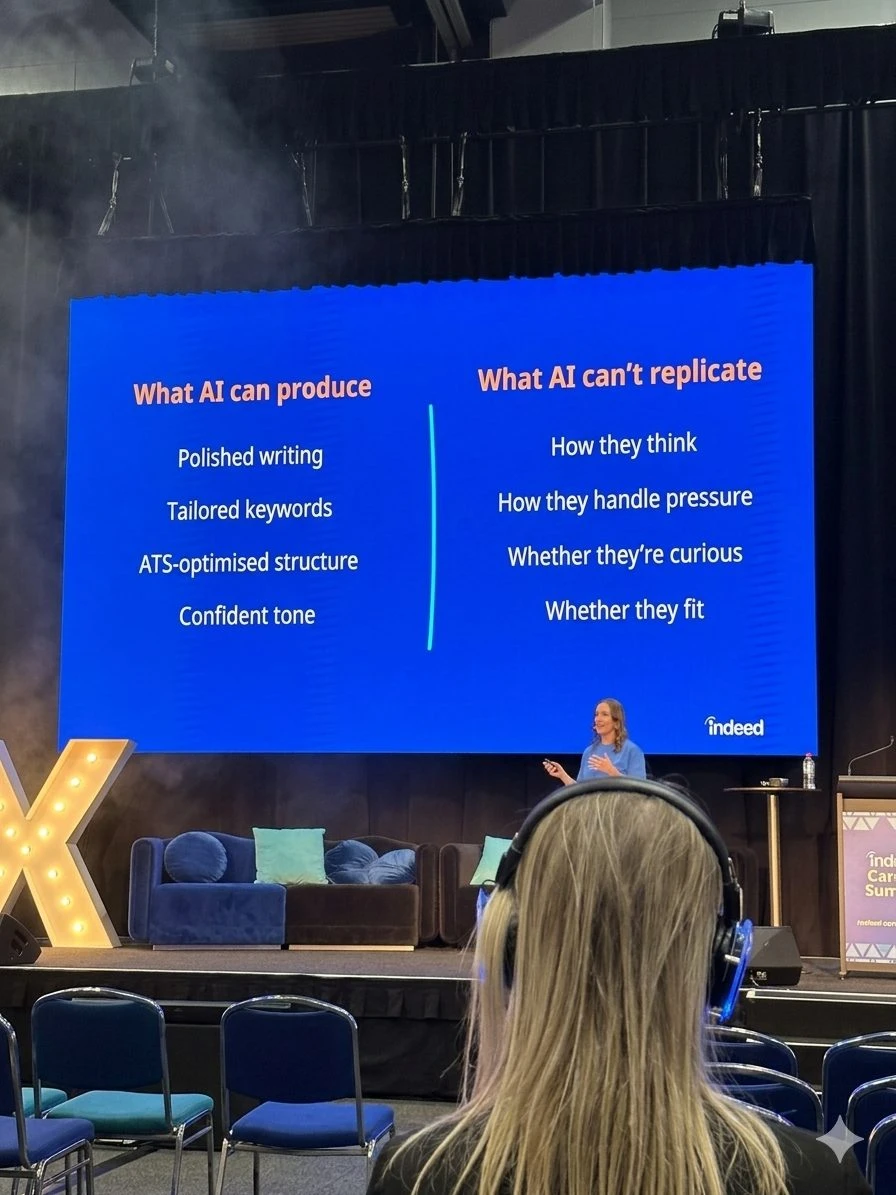
What was transparent is that recruitment remains fundamentally relationship-driven work.
Technology can improve efficiency across many parts of the hiring lifecycle, but efficiency alone does not automatically improve hiring outcomes.
Human work
Recruitment Remains Deeply Human Work
One of the more consistent themes speaking with agencies and vendors at TalentX, was the emphasis on human capability.
As more administrative and process-heavy tasks become automated:
- —scheduling,
- —note-taking,
- —screening support,
- —summarisation,
- —workflow management,
The work is increasingly, for the most part, showing the importance of human to human interaction
These are the areas where recruiter capability continues to matter significantly.
Behaviour
Behavioural Change May Be the Bigger Workforce Shift
One of our other key takeaways from TalentX wasn’t necessarily about technology itself, it was about behavioural change.
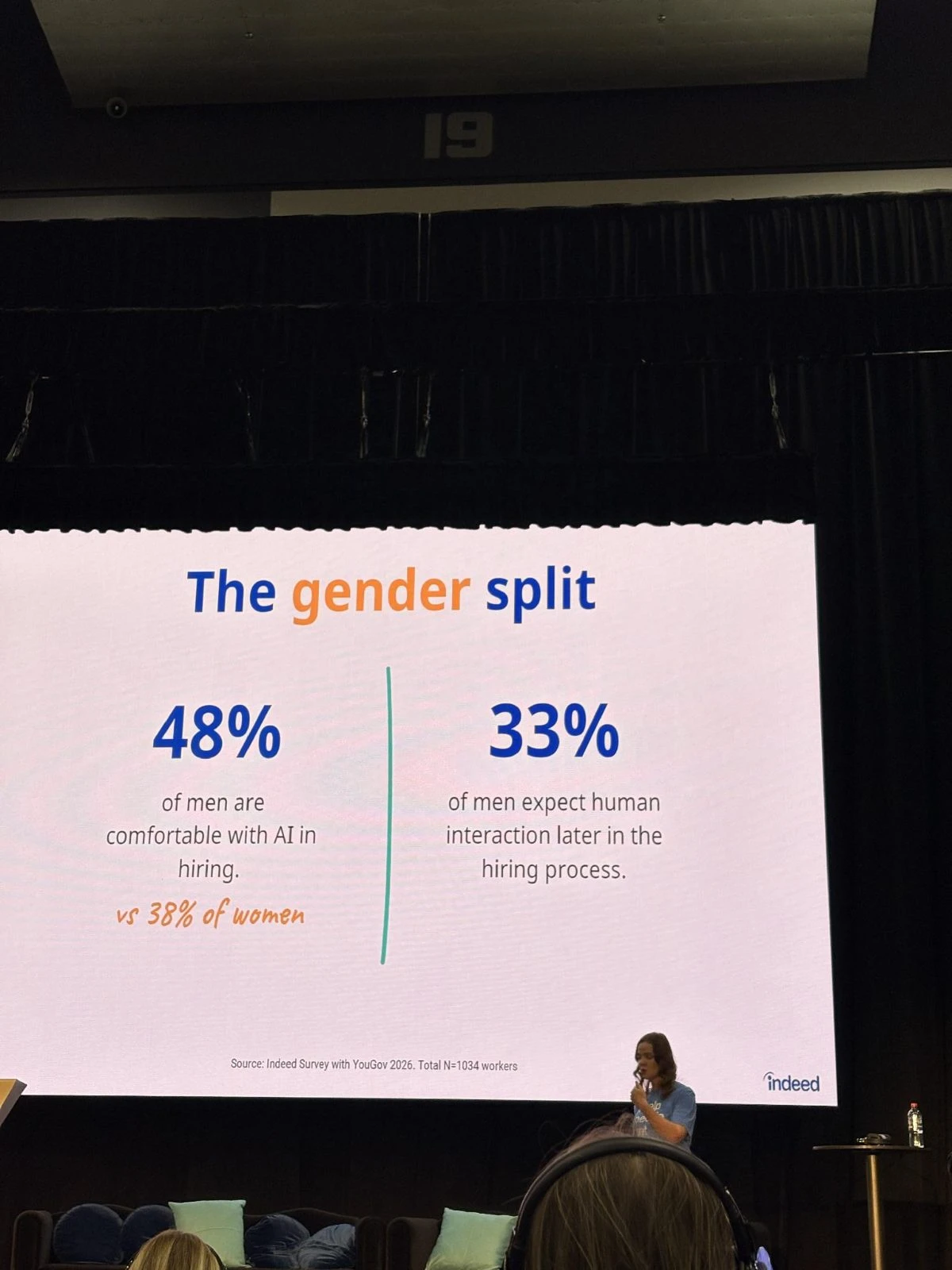
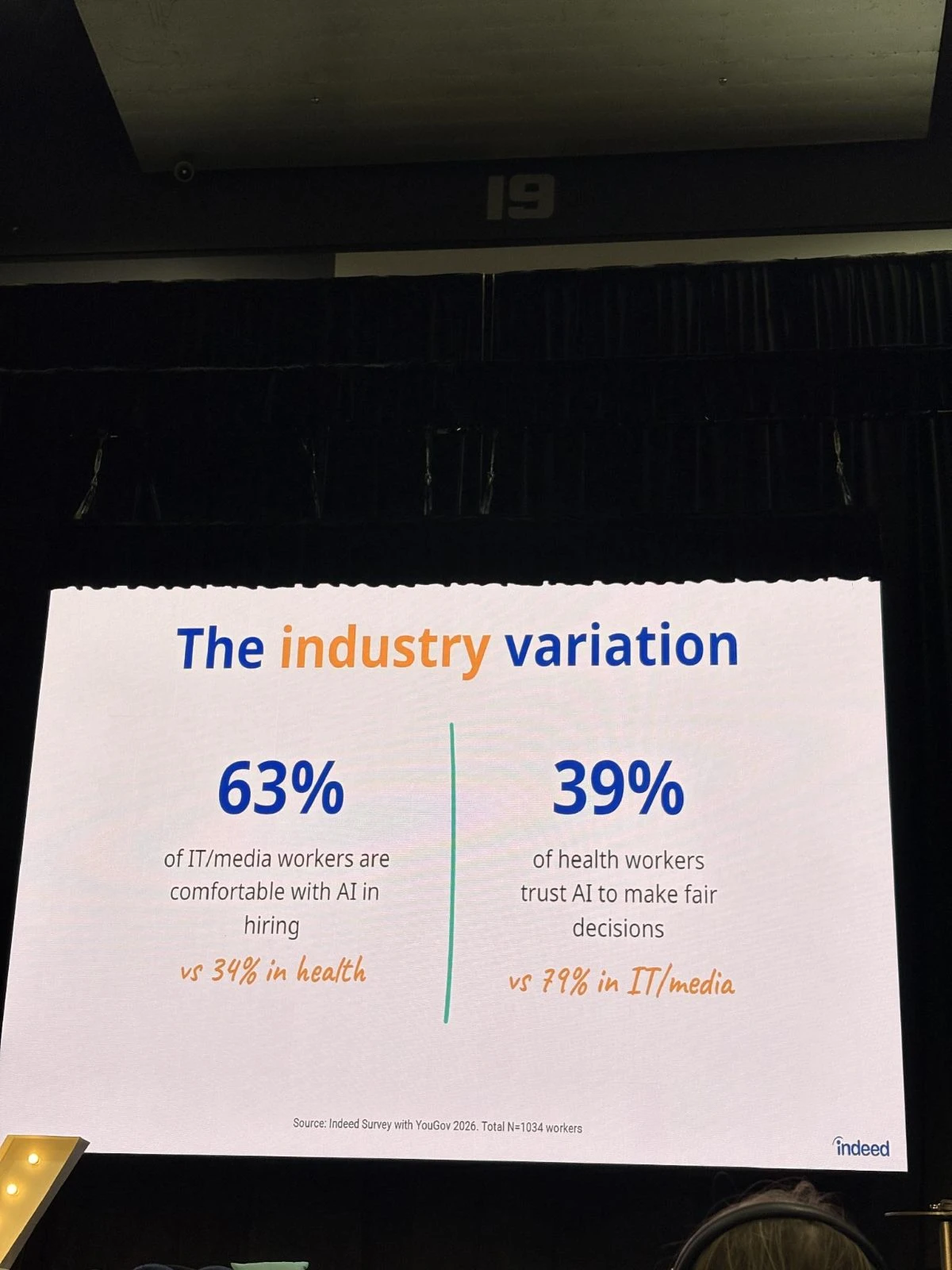
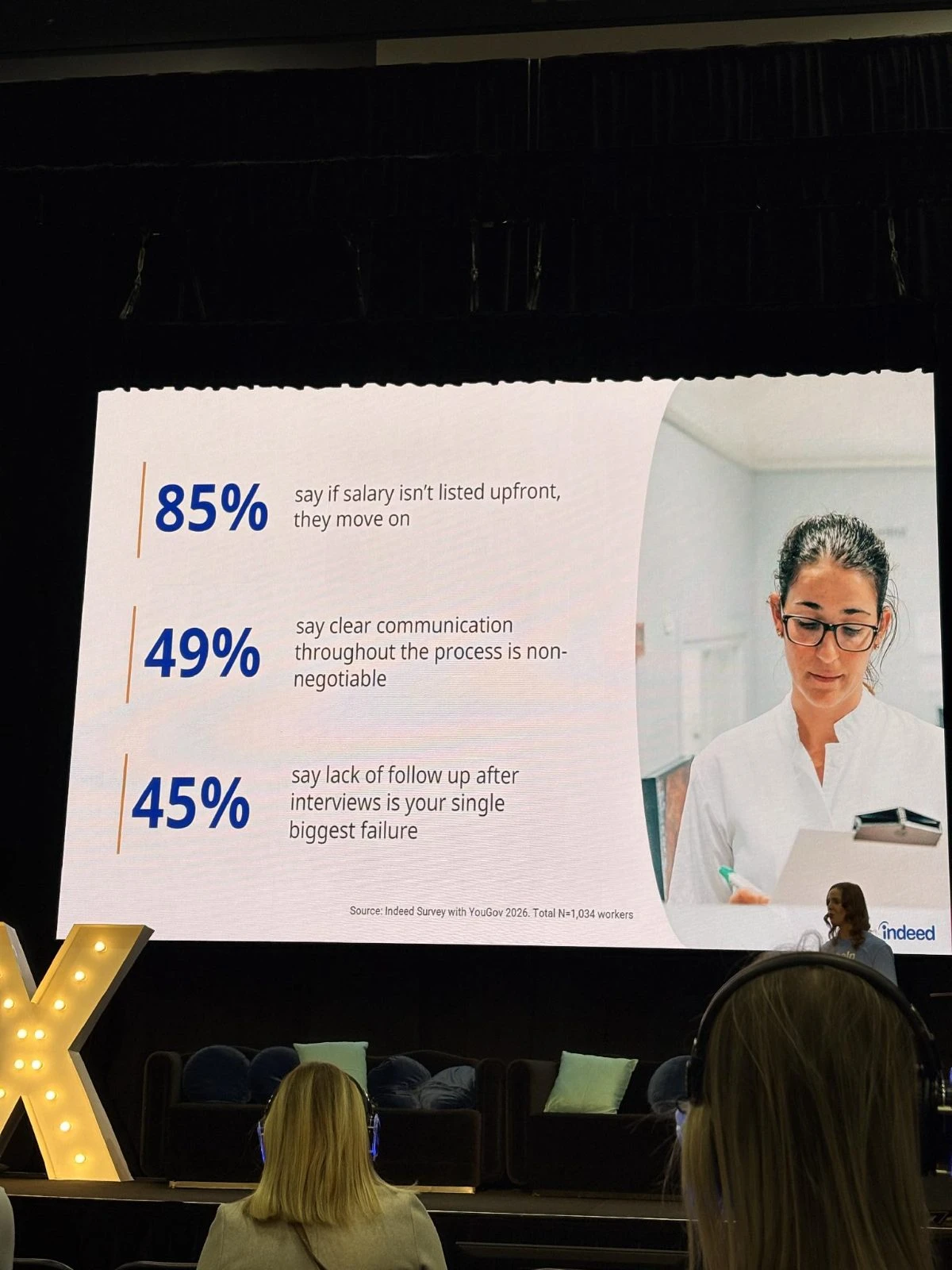
The way people engage with recruiters today is changing quickly. Indeed shared some interesting stats on the growing communication divide across workforce demographics. Younger candidates increasingly expect context and asynchronous engagement before direct contact, while older workforce segments still place greater trust in calls and meetings.
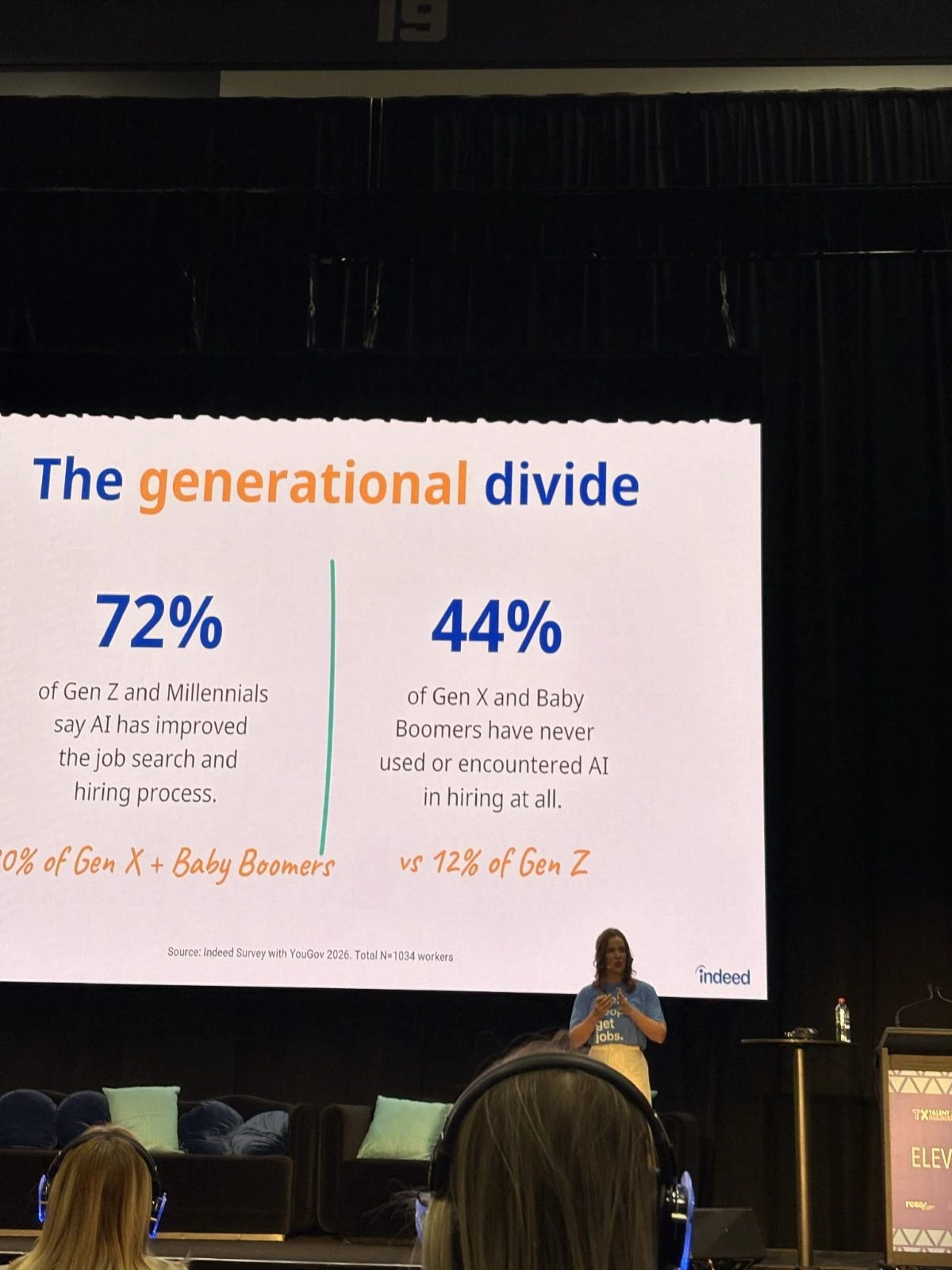
Makes sense how outreach strategies built around one communication environment may not be performing and reaching the right demographics.
At the same time, buyer behaviour on the client side is evolving as well.
Hiring managers and business leaders are researching agencies long before initial conversations happen. They are evaluating:
That changes how agencies build trust and build their outbound strategies. Visibility, positioning and authority increasingly matter alongside it.
This is one of the reasons more firms are now investing in:
As hiring complexity increases, improving hiring confidence and shortlisting quality is becoming more important than simply increasing candidate volume.
Systems
AI Is Amplifying Existing Operational Systems
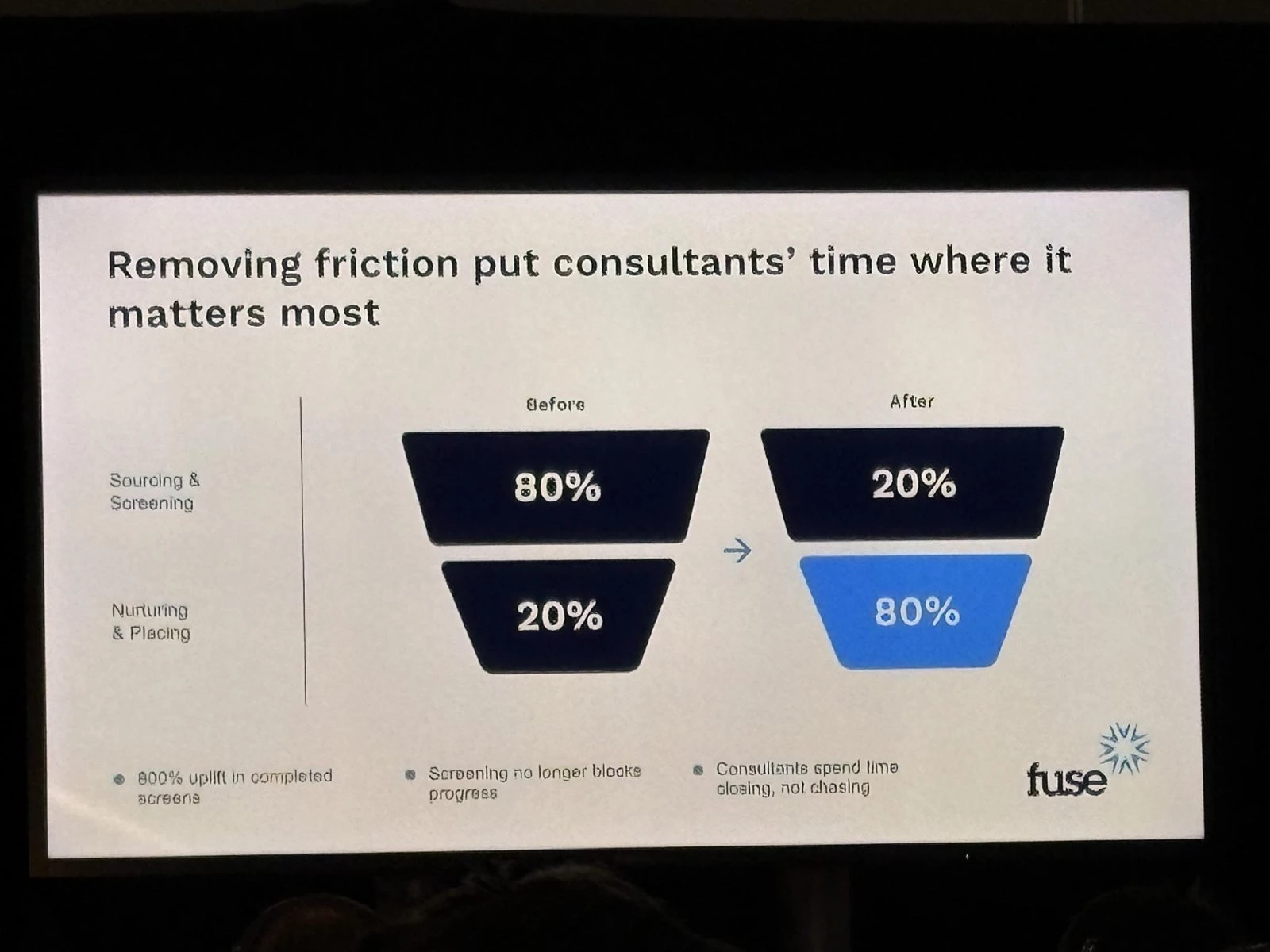
Another theme that surfaced repeatedly throughout the event was how dependent AI outcomes are on the quality of the systems underneath them.
The firms seeing the strongest outcomes are generally not approaching AI as a standalone layer.
They’re approaching it as part of a broader operational system:
- 01cleaner workflows,
- 02better recruiter enablement,
- 03stronger process consistency,
- 04clearer governance,
- 05and more deliberate communication strategies.
A maturing industry
The Recruitment Industry Is Entering a More Operationally Mature Phase
The overall picture emerging from TalentX wasn’t pessimistic.
If anything, it was clarifying.
The recruitment industry is moving beyond the early excitement phase of AI adoption and into a more operationally mature phase of implementation.
That’s a healthy progression.
The technology will continue improving quickly.
But long-term differentiation is unlikely to come from simply having access to the same tools as everyone else.
It will come from:
- 01how effectively agencies integrate them,
- 02how well recruiters adapt to changing workforce behaviour,
- 03how operationally disciplined firms become,
- 04and how successfully technology supports better human decision-making.
The agencies likely to create the most momentum over the next few years won’t necessarily be the ones adopting the most platforms.
They’ll likely be the ones combining:
Because ultimately, recruitment has always been about people.
Technology is changing how the work gets done.
But trust, judgement and human connection still sit at the centre of good hiring outcomes.
A founder’s note
After Ten Years in Recruitment, Human Connection Has Never Mattered More
I’ve spent the better part of a decade working across recruitment, sitting with hiring managers trying to fill critical roles, watching candidates navigate processes that too often felt opaque, and seeing first-hand how much of the real work came down to trust between people.
What struck me most at TalentX wasn’t the technology on display. It was the underlying tension in every conversation about it.
The more capable AI becomes at handling the transactional parts of recruitment, the screening, the scheduling, the outreach, the summarisation, the more exposed the relationship gaps become. The parts of the process where a recruiter either earns trust or loses it.
Candidates are increasingly arriving at conversations already informed, already evaluated, already forming a view. They’ve read your content, assessed your positioning, and made judgements about whether you understand their world before you’ve said a word.
And hiring managers are doing the same with agencies.
What that means practically is that the human moments in recruitment, the conversations that actually move things forward, the counsel that helps a hiring manager make a confident decision, the honest advice that steers a candidate toward the right fit, those moments carry more weight, not less.
Technology creates the capacity for those moments to happen more often. But only if the humans on the other side of the process are genuinely good at them.
Ten years in, I still believe the best recruiters are not process managers. They’re trusted advisors who happen to use excellent tools.
TalentX reinforced that for me. The agencies that will define the next decade of recruitment won’t be the ones with the most automations. They’ll be the ones that use technology to create more space for exactly the kind of human judgement that AI can’t replicate.
About the author
Author
Jonathan Winter
Founder, RipperWorks · Melbourne, AU
Across agency recruitment, enterprise hiring environments, and workforce operations, I’ve repeatedly observed the same issues across the industry: teams overwhelmed by application volume, strong candidates buried, hiring managers worried they were missing quality people, and applicants often left without responses or visibility.
RipperWorks was built to address that problem, as an intelligence layer designed to help recruiters and hiring managers make better hiring decisions and create a hiring experience that works better for both teams and candidates.
Sources & further reading
EXTERNAL